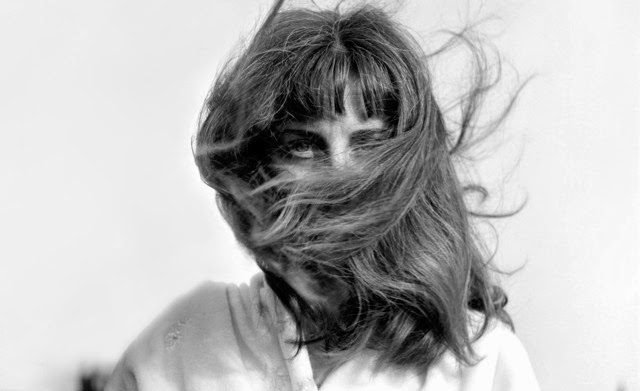
I recently had the great pleasure of seeing Afternoon of a Faun: Tanaquil Le Clercq during its run at the Film Society of Lincoln Center. I certainly knew of Le Clercq — a ballerina with New York City Ballet, George Balanchine’s muse, his fifth and last wife, who was stricken with polio at age 27 while on tour in Copenhagen in 1956 at the height of her career. She never danced or walked again. I had read Varley O’Connor’s 2012 novel, The Master’s Muse, about Le Clercq. But I had never seen her dance. This lovely film, directed by Nancy Buirski, is full of wonderful footage and photographs of Le Clercq, clearly one of the greatest ballet dancers of the twentieth-century. Gorgeous and beguiling, I really didn’t have a sense of her and her tremendous legacy until this film, and I am so glad that Buirski made it. And my particular screening was made even more special by the presence of the marvelous Arthur Mitchell, former NYCB principal dancer, founder of the Dance Theatre of Harlem and close friend of Le Clercq who spoke of her after the film. He turns 80 this year but appears so much younger, just brilliant. Take a look at the trailer here.
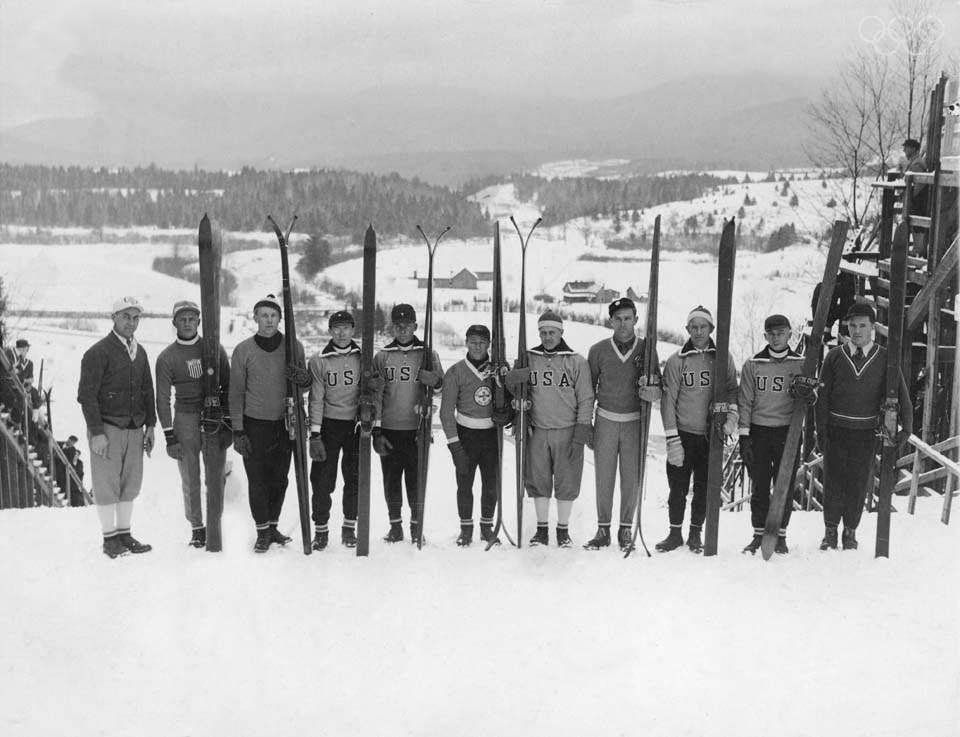
USA Olympic Ski Team, Opening Day of the Lake Placid Winter Olympics, February 4, 1932. From left, Coach Julius Blegen, John Steele, Carl Holmstrom, Edward Blood, J. Harsh, Lemoine Batson, Casper Simon, Ray Middleson, Pedar Falstad, Erling Anderson, and Lloyd Ellingson. Photograph FPG/Getty Images, www.olympic.org
I am a big fan of Organic by John Patrick and I am LOVING his autumn/winter 2014-15 collection presented on February 5. Exactly what I want to be wearing right now. www.organicbyjohnpatrick.com
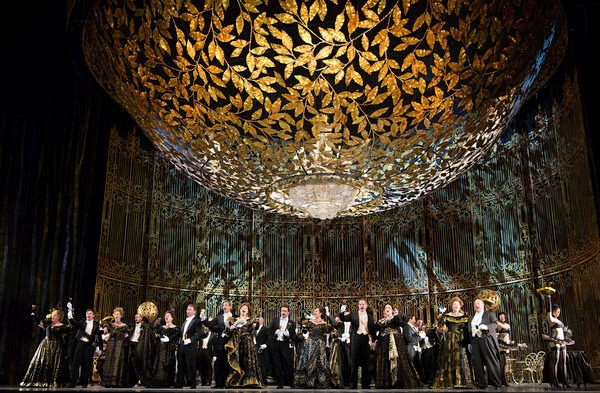
I love going to the opera. I adore the beauty and spectacle of it all, the total work of art. The Metropolitan Opera’s new production of Johann Strauss’ Die Fledermaus certainly did not disappoint. Set in fin-de-siècle Vienna, there was definitely a Gustav Klimt aesthetic in place, most evident in Act II, a glorious, glittering black and gold New Year’s Eve ball. Delightful and fun, the perfect way to spend Saturday night. Die Fledermaus runs through February 22. www.metoperafamily.org
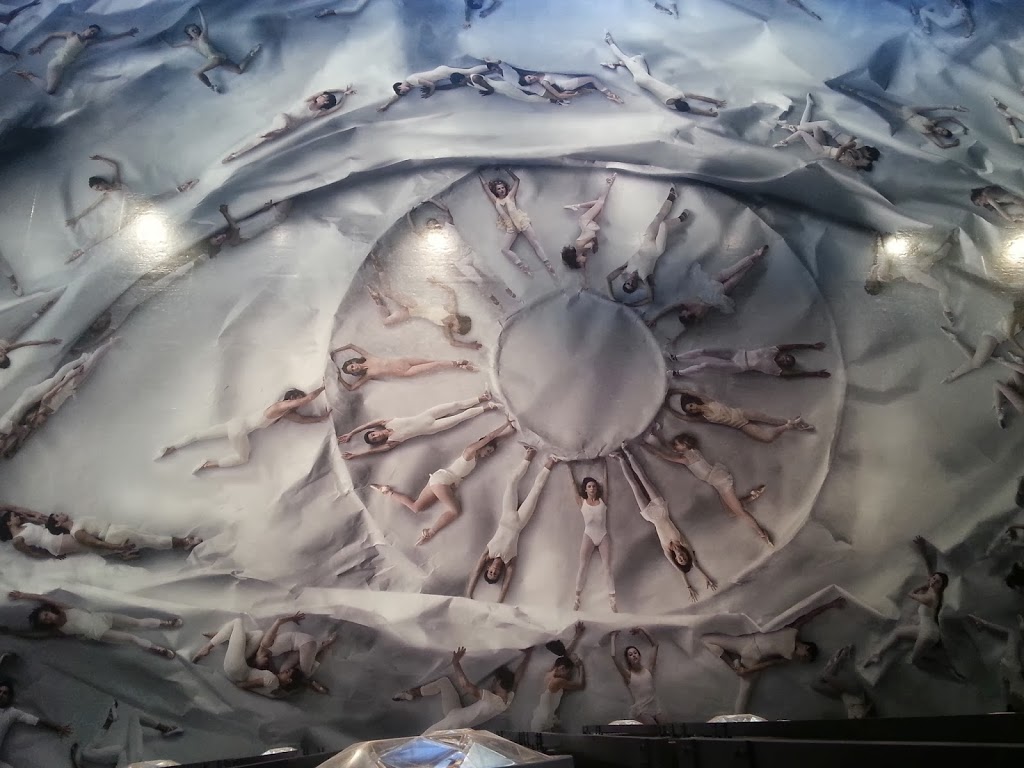
As part of the NYCB Art Series, a breathtaking installation by celebrated French street artist and photographer, JR, is currently on view at the David H. Koch Theater. In addition to the 6,500 square foot image of the company forming an eye amidst white paper sets that is affixed to the floor of the promenade level within the theater, there are also several wood panels with transferred images of the dancers and a massive, ethereal image pasted to the building’s facade. The entire exhibition is incredibly inspired and simply gorgeous to experience in person. The installation was open to the public all last week and will be in place during the winter season, if you are lucky enough to have tickets, which runs through March 2. Check out this videoabout the artist and the creation of his NYCB series.
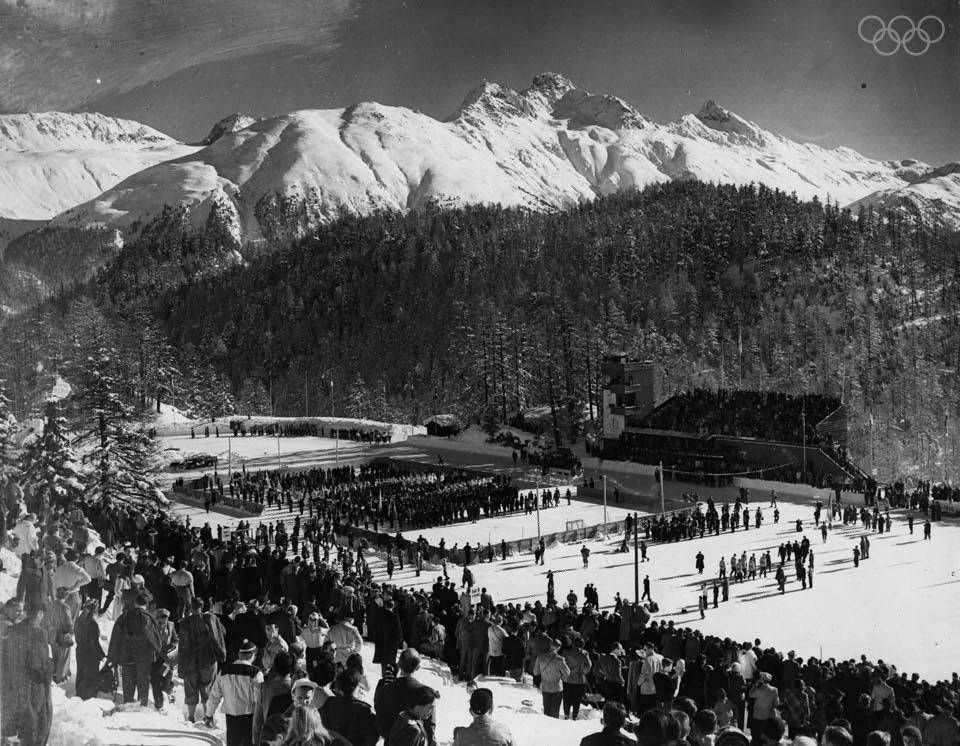
Opening Ceremony of the St. Moritz Winter Olympics, Switzerland, January 31, 1948. Ceremony opened by Swiss president Enrico Celio. Photograph by Chris Ware/Keystone/Getty Images, www.olympic.org
Today is Gertrude Stein’s birthday, it’s my birthday too. I love sharing a birthday with her and without fail find a reason to make mention of this each and every year. Here is a bit of proof. This year I would like to discuss the recently published 75th anniversary edition of her charming book, The World Is Round, illustrated by Clement Hurd. This reprint is gorgeous in the very same size as the first edition and with the same striking blue illustrations and text on the same lovely rose paper. This brand new version also includes two interesting essays, one by Hurd’s son, artist Thacher Hurd and one by his wife, writer Edith Thacher Hurd, both of which add enormously to the story of this great collaboration. In fact I never knew that Clement Hurd studied in Paris with Fernand Léger and other modernists — of course Stein chose him as her illustrator. The World Is Round is indeed a treasure. Happy Birthday Gertrude! The World Is Round by Gertrude Stein (HarperCollins Publishers, 2013)
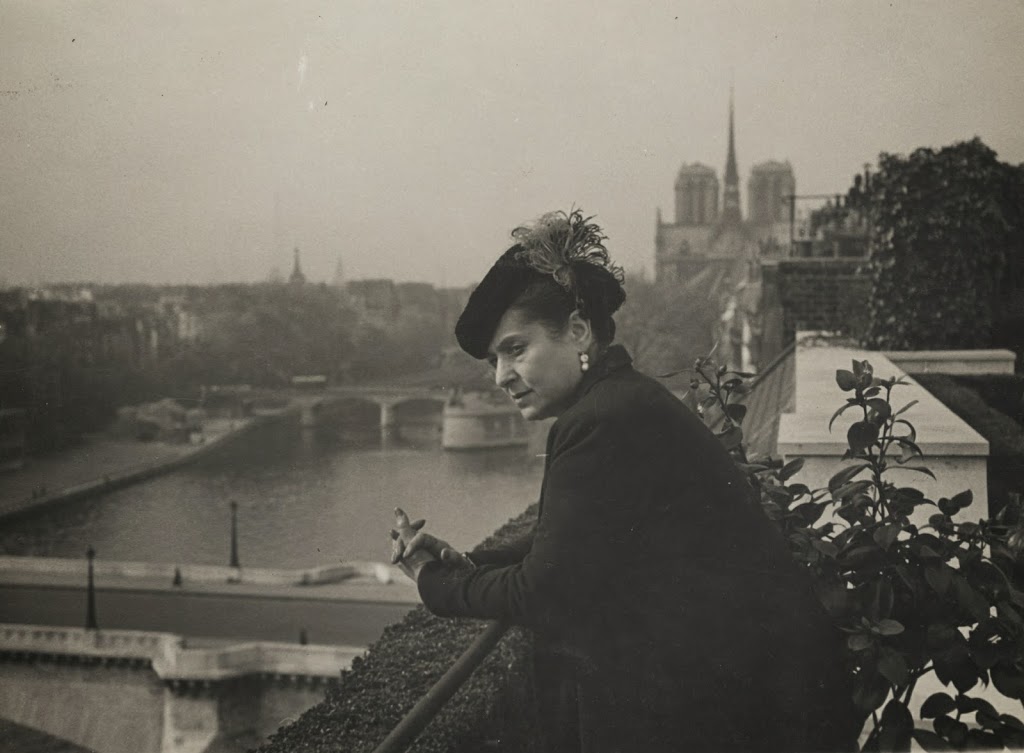
Helena Rubinstein (1870-1965) in the garden of her Paris apartment, 1937. A major exhibition entitled Helena Rubinstein: Beauty is Power will be on view at The Jewish Museum in New York City from October 31, 2014 – March 22, 2015. Photograph by F.S. Lincoln. Fay S. Lincoln Photograph collection, 1920-1968, HCLA 1628, Special Collections Library, University Libraries, Pennsylvania State University.
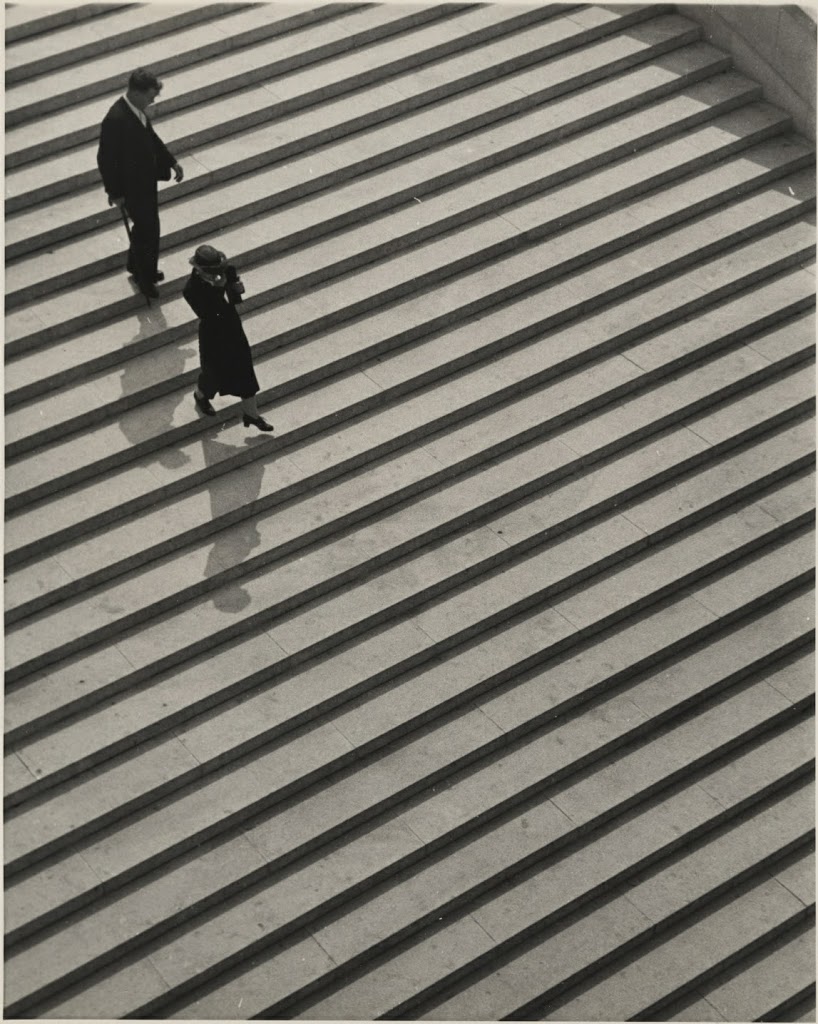
People walking down stairs, Exposition Internationale des Arts et Techniques dans la Vie Moderne, 1937. Photograph F. S. Lincoln. Fay S. Lincoln Photograph collection, 1920-1968, HCLA 1628, Special Collections Library, Pennsylvania State University.
As I was writing our recent post on Maynard L. Parker, I couldn’t help but think about F.S. Lincoln (1894-1976), another great American architectural photographer of the same era. Based in Manhattan, Lincoln extensively documented the work of some of the most notable New York architects and designers of the time including McKim, Mead & White, Eugene Schoen, Ely Jacques Kahn, Joseph Aronson and Russel Wright, among numerous others. His work appeared in a wide range of shelter magazines such as Architectural Forum, Architectural Record and House & Garden. He also captured the two New York World’s Fairs and many of the international expositions in Europe, and received large commissions to photograph Colonial Williamsburg and antebellum architecture in the deep south. My favorite F. S. Lincoln photographs are always very distinct, very orderly black and white images of the some of the finest American and European modern design, architecture and interiors.
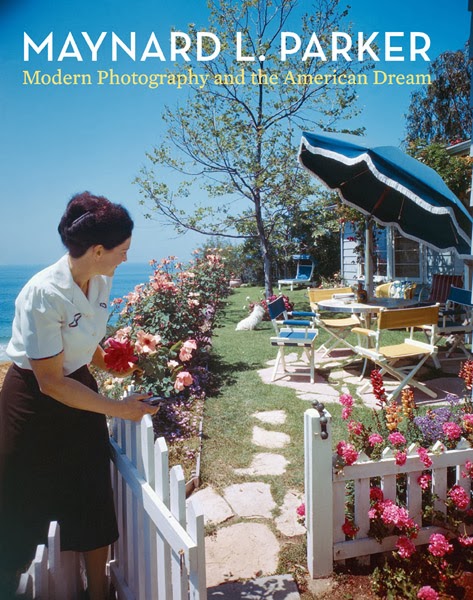
I recently came across a most fantastic book — Maynard L. Parker: Modern Photography and the American Dream. Published in 2012 by Yale University Press, it is a beauty. I must admit, I had never heard of Maynard L. Parker (1900-1976), one of this country’s most prolific and I would also say influential commercial architectural and design photographers of the twentieth century. From the 1930s through the 1960s, Los Angeles-based Parker’s carefully constructed images of a new modern American aesthetic and way of life, captured mainly in Southern California, filled the pages of numerous leading shelter magazines such as Architectural Digest, Architectural Forum, Sunset and Good Housekeeping. But it was with House Beautiful and its legendary editor-in-chief, Elizabeth Gordon, that Parker enjoyed his most successful and important partnership. In addition, Parker documented the homes of a number of Hollywood celebrities, and the work of a number of celebrated architects, among them Frank Lloyd Wright, Harwell Hamilton Harris and Pierre Koenig. Maynard L. Parker Modern Photography became an enormously successful business and Parker himself, working full-time since the age of 16, did without a doubt, embody the American dream. Although the coffee table cut of this volume could be misleading, it contains seven great, scholarly essays about the life, career and legacy of Maynard L. Parker. I found it seriously enlightening and quite a visual feast. And right now, in the dead of winter, those coastal and poolside photographs of sunny Southern California especially spoke to me! Maynard L. Parker: Modern Photography and the American Dream, edited by Jennifer Watts (Yale University Press in association with the Huntington Library, 2012)