I finally picked up a copy of How To Boil An Egg, Rose Carrarini’s newest cookbook just published in February! I love Rose Bakery in Paris and I love her first book, Breakfast, Lunch, Tea. How To Boil An Egg too has that simple, stylish design and is full of gorgeous recipes and exudes the freshness and particular sensibility that is Rose Bakery. And instead of photographs, this cookbook is illustrated with original paintings by botanical artist Fiona Strickland. Check out this lovely video about this lovely book. How To Boil An Egg by Rose Carrarini (Phaidon, 2013)
This weekend marks the close of the 28th International Festival of Fashion & Photography organized by Villa Noailles in Hyères, France. This festival seems the perfect legacy for the owners and creators of the villa — Vicomte and Vicomtesse Charles and Marie-Laure de Noailles. Legendary modern art patrons and collectors, they commissioned numerous works of art and financed films in the 1920s and 30s by their surrealist friends Man Ray, Jean Cocteau, Luis Buñuel and Salvador Dalí. Man Ray’s film was actually shot in part at their Hyères residence and starred, among others, the Vicomte and Vicomtesse themselves. The villa was designed by architect Rob. Mallet-Stevens, and is considered one of the earliest and most important modern structures in France. Completed in 1925, its original furnishings represent the work of some of the leaders of the modern movement including Eileen Gray, Pierre Chareau, Georges Djo-Bourgeois and Francis Jourdan. The much-lauded Cubist garden was designed by Josef Hoffmann-trained architect Gabriel Guévrékian. Today, the Villa Noailles through its programs, residencies and exhibitions very clearly represents the keen vision of the Vicomte and Vicomtesse to support and encourage emerging artists and designers. We imagine they would be very pleased. www.villanoailles-hyeres.com
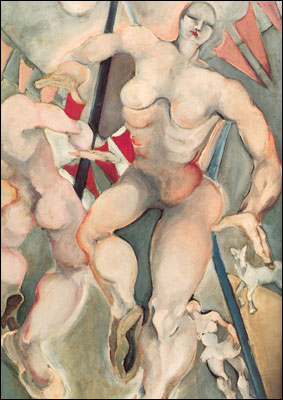
With all of the hype surrounding the newest film adaptation of The Great Gatsby, I have found myself thinking about a certain Fitzgerald. Although Zelda’s (1900-1948) identity and legacy seem too often enmeshed in that of her famous husband, she was in her own right an accomplished artist, dancer and writer. I often think about a fascinating exhibition of her work I stumbled upon several years ago — wishing I had purchased the catalog, if there even was one — that included her paintings and the lovely paper dolls created in the 1930s for her daughter Scottie and later for her own pleasure. Her paper dolls are very delicate and detailed, as one would expect them to be. Her paintings contain quite distorted, sometimes grotesque figures, even those of ballet dancers, which appear to have been a favorite subject. Fitzgerald’s body of work in a way feels at once cohesive and as divergent as we have come to understand her life to be.
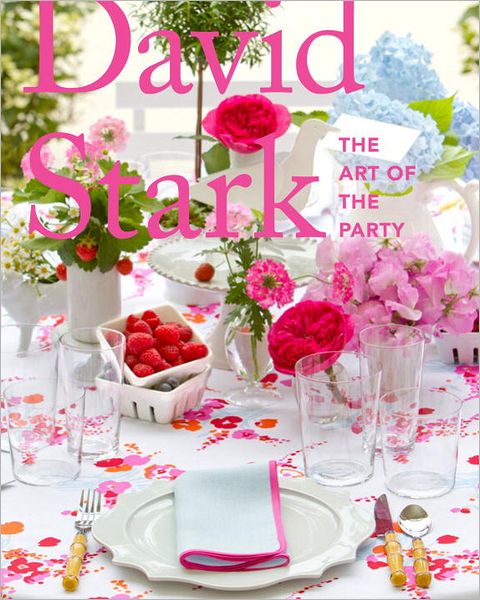
I am delighted to be attending tonight the launch of my good friend’s newest inspiration, David Stark: The Art of the Party and the premiere of Paper Tales, a collection of one-of-a-kind art pieces created exclusively for Bergdorf Goodman. David continues to reinvent the obvious and never fails to surprise with innovative designs — I’m sure that tonight will be no exception.
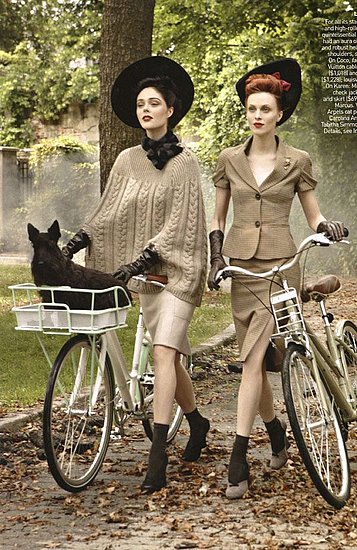
Now that fair weather seems to be firmly upon us, I have lately and often been enjoying my beloved bicycle — one of the nicest gifts I have ever received. Mine is a vintage-inspired Gary Fisher Trek city bike, the colors of white and green milk glass with a huge metal basket and leather seat and handles. Gorgeous. And what a great ride! I was thrilled a few years back to see Coco Rocha captured with it in this enchanting photograph in the September 2009 issue of Vogue. May is National Bike Month and today starts Bike to Work Week — think about it! https://www.bikeleague.org/programs/bikemonth/
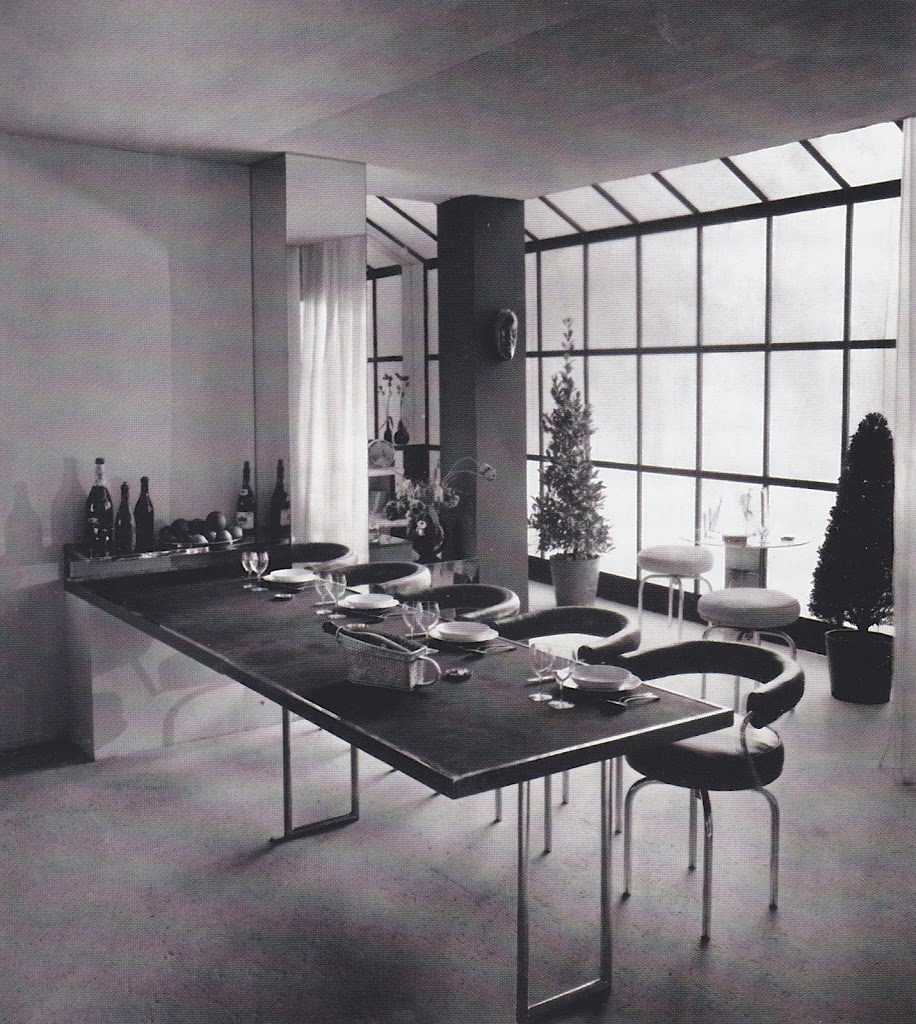
Charlotte Perriand dining room exhibited at the Salon des Artistes Dècorateurs in Paris, April 1928. The extendable nickel table and tubular-steel stools were designed by Perriand in 1927. Photograph from Archives Charlotte Perriand.
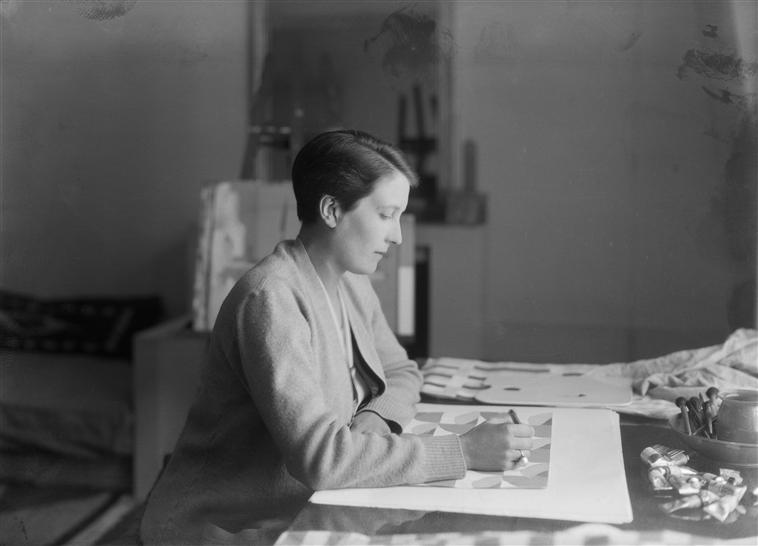
To carry on the discussion of female designers this week on THE BATON, I wanted to include Elise Djo-Bourgeois. Best known as the wife and collaborator of the celebrated French architect Georges Djo-Bourgeois (1898-1937), Elise was an exceptional modernist textile and rug designer in her own right. Her geometrically patterned fabrics and rugs without question helped to distinguish the Djo-Bourgeois interior. Her work often stood beside that of architect/designer giants in 1920s and 30s Paris such as Rob. Mallet-Stevens and Charlotte Perriand, and resided in some of the most important modern structures of the day. Elise and her work definitely deserve a closer look.
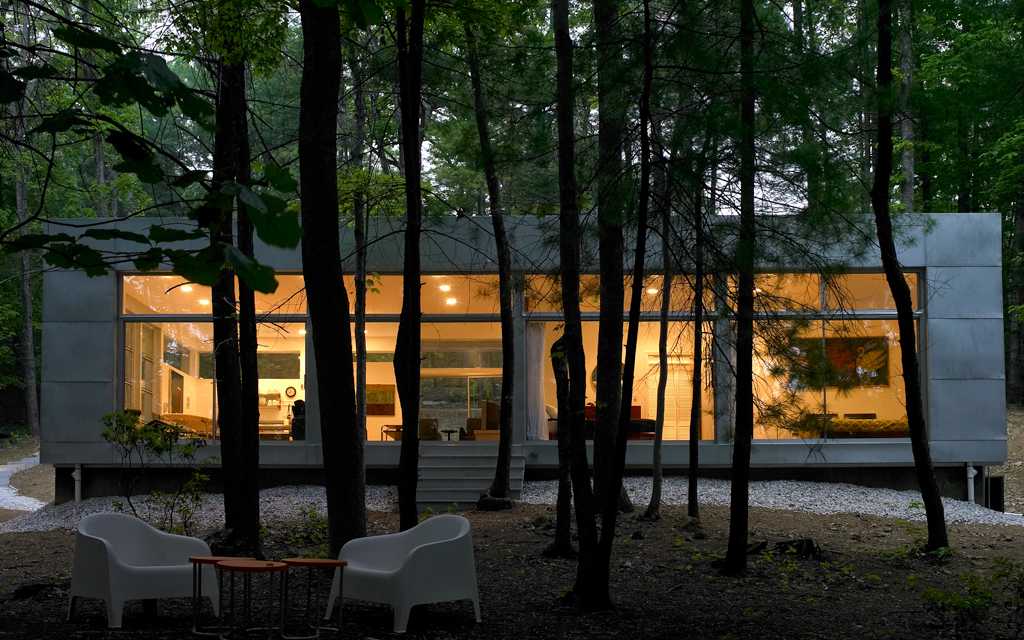
We have been loving the work of Rocio Romero for some time now. She is the Chilean-American architect-designer of some of the coolest and smartest kit homes in this country and abroad. Her range includes customized options as well as a series of prefab LV models from which to choose. She also designs furniture. Romero’s design principles — simple, modern, green — definitely speak to the way we aspire to live each day and hopefully speak to the future of the built environment in total. www.rocioromero.com
WHAT INSPIRED YOU TO CREATE LEGATO STUDIO AND WHAT LED YOU TO FOCUS SPECIFICALLY ON TRANSFORMATIVE FURNITURE?
When [Josh and I] found our apartment in Battery Park, we recognized that it had more positives (not one square foot of wasted space, like an extra hallway, or large entryway, or odd shaped room) than negatives (no natural dining area within the small living room and kitchen). Other apartments in the building we knew we loved did offer that extra dining space, but at a much higher price tag than we could afford. So our plan was to grab the apartment within our budget, and problem solve with furniture. This was a task my husband happily left to me — and I couldn’t wait to start the process.
As I set out to create an ‘instant dining room’ that would disappear in some fashion, I did some research to find Matt Lee, the contractor ‘who could do anything.’ A recent article in the New York Times touted a 2 level studio coop in Gramercy he created where the rules included ‘no construction or structures of any kind connected to internal walls.’ So, he designed a second floor that was completely self-standing for a very happy client. He seemed to make all of his clients happy, so I hired him.
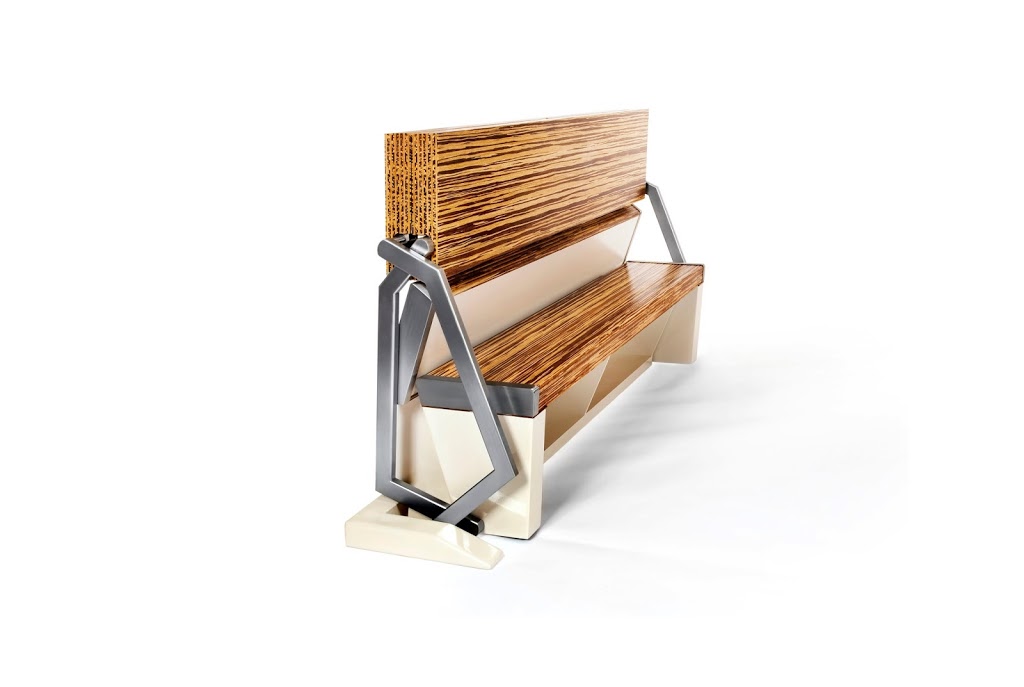
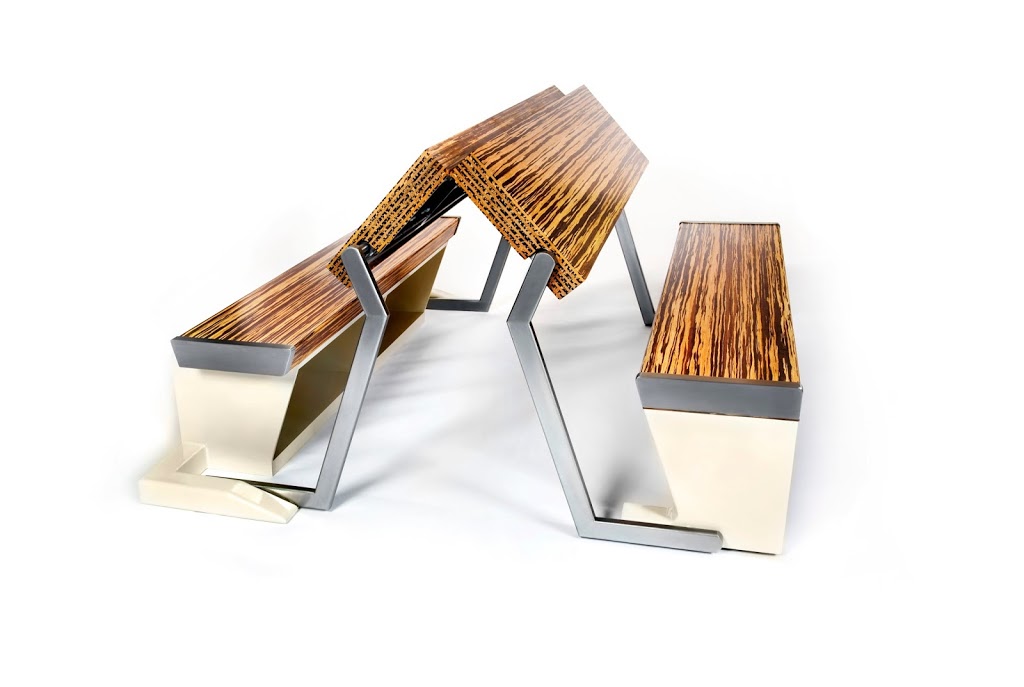
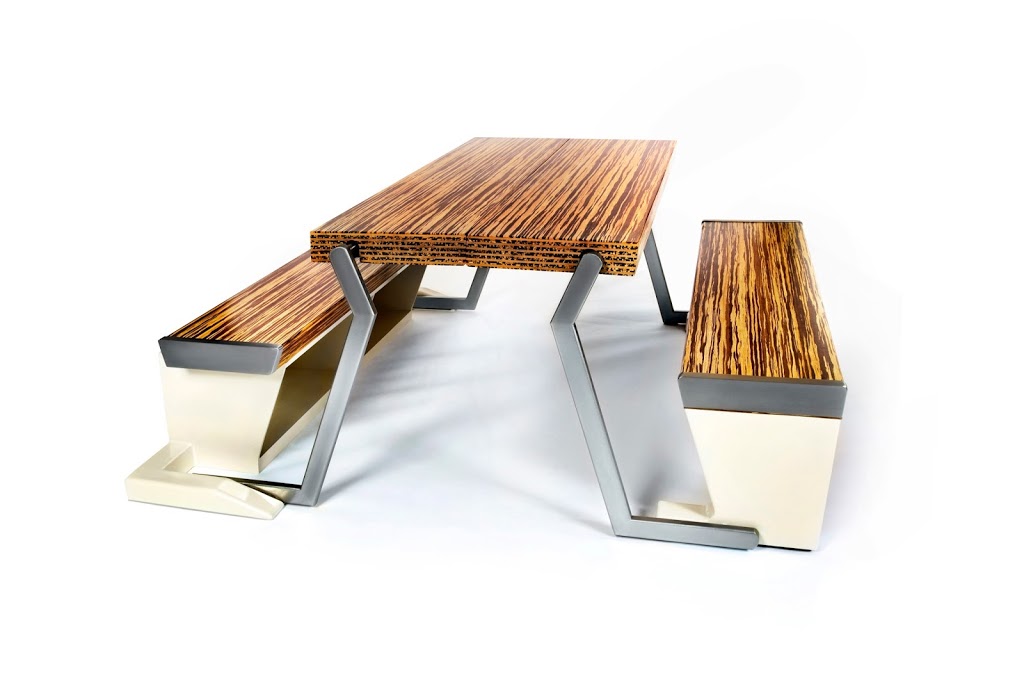
When Matt and I began measuring and talking through ideas, I realized two things — my perfect apartment, with its lack of wasted space, allowed for no space anywhere to store chairs, AND, a murphy bed style-like table that would fold down from the wall would be too wide for my living room (I could just see tomato sauce all over our new sofa). So, Matt and I started thinking about a table that would include seating, and would fold out horizontally rather than vertically in the space. Did this exist already? Not really. So….we worked with an engineer to sort out the details of what is now known as Legato Studio’s “Cambia,” (Italian for alter, shift).
After Cambia was created in our minds and on paper, we realized we had something special. What should we do with this? Should we patent our invention? Start a company? Scramble to attend New York’s next (and best) furniture trade show? Could we do all of that in 2 months? Why not. After investigating with a patent lawyer that no prior art or design existed anything like our Cambia, we knew we had something not only special – but perfect for urban dwellers. Legato Studio was formed – and our (utility) patent pending came hours before our 2011 debut at ICFF.
YOUR DEBUT PIECE, CAMBIA, IS A REALLY BRILLIANT CONCEPT — FULL-SIZED DINING TABLE, ERGONOMIC WORKSTATION AND BENCH WITH STORAGE. IN WHAT ENVIRONMENT OR SPACE WOULD YOU MOST LOVE TO SEE CAMBIA?
Our thoughts for Cambia have expanded well beyond residential space – we see so many commercial applications for the table as well. One obvious choice would be any small restaurant that wants to turn itself into a dance hall/bar, or any place where a lunchroom could turn into a gym. The possibilities are endless. And what’s great about Cambia’s design is that it can be made to custom sizing and with a variety of materials. So, we see our target audience as really anyone that needs/wants multiple uses for their work or living space.
WHAT IS NEXT FOR LEGATO STUDIO?
What’s next is to continue to get the word out there that we can make our table custom for clients out of our studio in Bushwick (Brooklyn). With Bloomberg’s ADAPT NYC project making ‘micro-apartments’ such a hot topic in the press right now, there is no time like the present to capitalize on opportunities. Everyone is talking about maximizing space.
WHAT BRINGS YOU JOY?
So many things bring me joy, hard to name just one — what brought me joy today was seeing my children play so nicely together.
COMB OR BRUSH?
Comb does the trick, brush usually means ‘styling’ which I tend to do let others do in a salon, or do myself with rollers rather than a brush and hair dryer.
DO YOU LIKE YOUR NAME?
I do – I didn’t in the 80’s, when I felt like it was all over the place. But it died down…..
FINISH THIS SENTENCE. MY AGE IS…………….
just right. But I will say life is moving too fast.
WHAT’S FOR DINNER TONIGHT?
Takeout spicy tuna rolls with brown rice, salad, cheese and crackers, orange zero vitamin water. Might sneak in a few girl scout cookies (Samoas).